
What Happens When We Delay Payment to Our Domestic Helpers
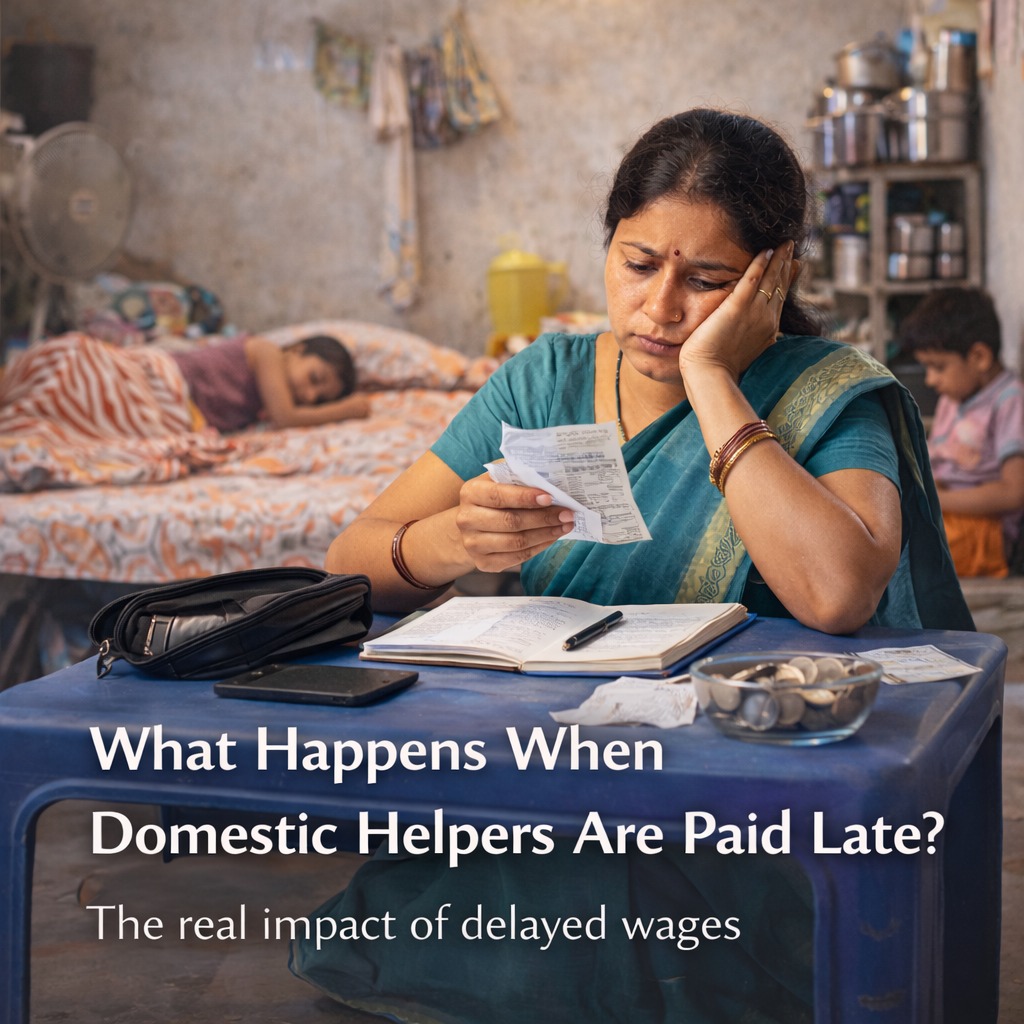
Delayed salary payments often begin unintentionally.
A busy month, a missed reminder, a holiday, or the assumption that “one or two days won’t matter.” In many households, this delay is not driven by disregard, but by oversight.
However, over our years of working closely with domestic helpers and employers, we have seen that delayed payments—no matter how unintentional—create consequences that go far beyond a few days’ wait.
1. Immediate Financial Stress
For most domestic helpers, salaries are not discretionary income. They are used for:
Daily household expenses
Children’s school fees
Rent payments
Loan repayments
Sending money to family members
When payment is delayed, even by a few days, it can disrupt their entire monthly planning. What feels like a minor delay to an employer often becomes a significant financial strain for the helper.
2. Emotional Impact and Anxiety
Delayed payments often lead to worry and uncertainty.
Helpers may hesitate to ask for their salary, fearing it may appear disrespectful or create tension. This internal stress affects:
Concentration at work
Emotional well-being
Confidence in the employer–employee relationship
Over time, this anxiety quietly builds resentment—even if it is never openly expressed.
3. Erosion of Trust
Trust in any working relationship is built on predictability.
When salaries are delayed without clear communication:
Helpers start questioning reliability
Verbal assurances begin to lose value
The relationship shifts from professional to uncertain
Once trust weakens, even small misunderstandings tend to escalate faster.
4. Impact on Work Quality and Engagement
While most helpers remain professional, delayed payments often affect motivation subconsciously. When someone feels financially insecure or undervalued:
Engagement drops
Initiative reduces
Emotional distance increases
This is rarely intentional, but it is a natural human response to uncertainty.
5. Higher Attrition and Sudden Exits
One of the most common reasons helpers leave jobs—sometimes without much notice—is inconsistent or delayed salary.
From our observations:
Helpers may start searching for alternatives quietly
A better-paying or more predictable opportunity becomes attractive
Employers are often surprised when the helper leaves “without any complaint”
The root cause, however, is often delayed or irregular payments over time.
6. Strained Communication Around Money
Once payments are delayed, salary discussions become awkward for both sides.
Employers may feel uncomfortable being reminded. Helpers may feel embarrassed asking. This silence creates tension that could easily have been avoided with timely payments.
What Works Better: Predictability Over Perfection
Households that experience smoother, long-term working relationships usually follow a simple practice:
Fix a salary date
Communicate in advance if there will be a delay
Stick to the timeline consistently
Timely payment is not just about money—it signals reliability, respect, and professionalism.
A Small Habit With a Big Impact
Paying on time may seem like a small operational detail, but it has a disproportionately large impact on:
Trust
Stability
Retention
Overall household harmony
At Helper4U, we have seen repeatedly that predictable salary practices lead to better outcomes for both employers and helpers.