
Cook Duties and Responsibilities: Full Checklist
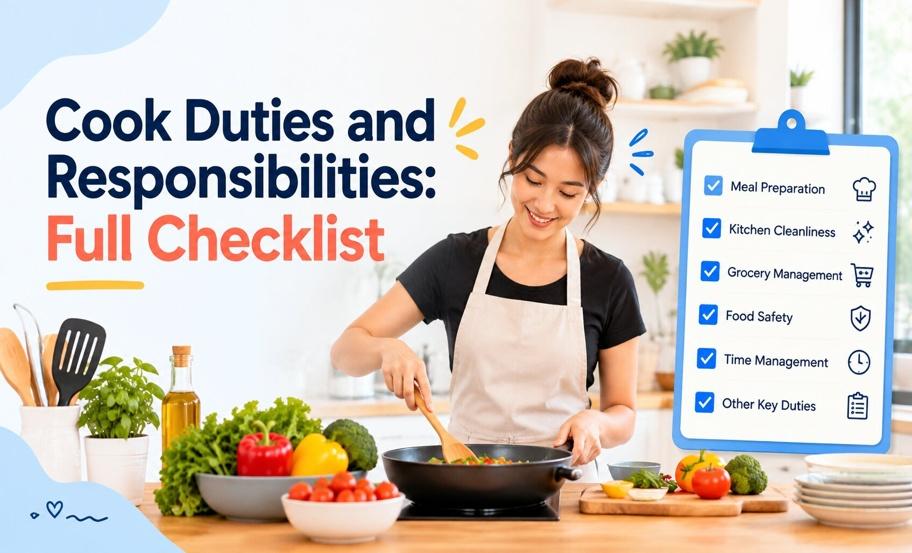
What Are the Main Duties and Responsibilities of a Cook?
Hiring a cook makes everyday life easier—but only when both sides are clear about the work involved.
The phrase “cook duties and responsibilities” may sound straightforward. Yet one household may expect two fresh meals a day, while another may also expect menu planning, grocery shopping, serving and special food for children or elderly family members. Unless these expectations are discussed before hiring, misunderstandings are almost inevitable.
So, what does a cook normally do, and which duties need separate agreement?
Cook Duties and Responsibilities: Full Checklist
The primary responsibility of a cook is to prepare safe, hygienic meals according to the household's requirements. This usually includes:
• Preparing ingredients for cooking
• Cooking the agreed meals and dishes
• Following the household's food preferences
• Maintaining hygiene while handling food
• Storing cooked food and ingredients correctly
• Cleaning the utensils and work area used during cooking
• Informing the employer when essential ingredients are running low — sometimes shopping for ingredients
1: Meal Planning and Menu Preparation
Some households decide the menu. Others expect the cook to suggest meals based on available ingredients, family preferences and time.
A cook may suggest meals that fit a fixed schedule. But complete meal planning should not be assumed part of a home cook's responsibility. If you want the cook to decide the menu independently or prepare a weekly plan, discuss this during the interview.
2: Grocery and Ingredient Management
Before beginning, a cook generally checks whether the required ingredients are available. Washing, chopping, peeling, soaking and preparing dough are normally part of cooking.
Buying groceries is different. Some cooks may be willing to shop for groceries from a nearby shop, but shopping is not automatically part of the job. If required, agree on the frequency, time and payment process.
3: Food Preparation
This is the central part of the role. It may include breakfast, lunch, dinner, snacks, rotis, rice, dal, vegetables or non-vegetarian dishes.
Before hiring, discuss:
• The number of people to be served
• The meals to be prepared each day
• The cuisines and dishes the cook should know — or is willing to learn
• Whether separate food is needed for different family members
• Preferred levels of oil, salt, sugar and spice
• The time by which each meal must be ready
• Whether food is cooked fresh or prepared in advance
Even an experienced cook may need time to understand your family's taste. Clear feedback during the first few days helps both sides adjust.
4: Special Diets and Food Preferences
If anyone has special dietary requirements due to diabetes, allergies, religious restrictions or a medically advised diet, tell the cook clearly. The same applies to baby food or food for an elderly person, Jain way of cooking, etc.
Ask about relevant experience, but do not assume that a cook is a nutritionist. If a doctor or dietitian has provided instructions, share clear recipes, quantities and restrictions. This knowledge is not part of a home cook's responsibilities.
Serious allergies or strict vegetarian requirements may also call for separate utensils and storage.
5: Serving and Presentation
Placing food in serving bowls may be commonly expected as a responsibility of a home cook. Serving at the table, laying it or clearing it afterwards is a separate responsibility—especially for a part-time cook whose schedule may only cover cooking.
6: Kitchen Cleaning and Organisation
Basic hygiene is part of responsible cooking. A cook should wash hands, use clean utensils, keep chopping surfaces hygienic and leave the cooking area reasonably clean. Washing the utensils used for cooking may be included, depending on the arrangement.
Deep-cleaning the kitchen, scrubbing cabinets, cleaning the refrigerator, mopping or doing unrelated domestic work are not automatically a cook's responsibility. They must be agreed upon separately.
A cook will usually return ingredients and utensils to their places and alert the employer when staples are low. Reorganising cabinets, tracking monthly stocks or managing the entire kitchen should not be assumed and can be included only if both sides agree.
7: Leftovers and Food Waste Management
A cook should cover food, refrigerate items that may spoil and keep raw and cooked food separate.Explain what should be refrigerated, reused or discarded. A cook should not have to guess whether leftovers are to be kept or how food waste is to be discarded.
Safe food handling is also an important part of a cook's responsibilities. The cook should check that ingredients are fresh before using them, wash produce properly and avoid cross-contamination by keeping raw meat, seafood and eggs separate from cooked or ready-to-eat food. Perishable ingredients and leftovers should be refrigerated promptly, while cooked and uncooked foods should be covered and stored separately in appropriate containers. Food that smells unusual, appears spoiled or has been stored incorrectly should not be used without checking with the employer. Clean hands, utensils and preparation surfaces are essential throughout the cooking process. These practices help prevent spoilage and food-borne illness and are widely recognised as core cooking responsibilities. Explain these to your cook even if they are experienced.
Home Cook vs Restaurant Cook: Are Their Duties the Same?
The job changes according to the workplace and arrangement.
Home or domestic cook: Usually prepares agreed meals for one household, often within fixed morning or evening hours. The cooking is done basis the preferences of the family, in terms of menu and dietary requirements.
Private cook: May handle wider menu planning, customised meals and kitchen management for an individual or family.
Restaurant cook: Works within a commercial kitchen, follows standard recipes and portions, and coordinates with a larger team. The cooking is done as per the provided menu, and for multiple customers.
Live-in domestic cook: May prepare several meals and have broader responsibilities, but working hours, breaks, accommodation and any additional household duties must be clearly agreed.
The terms Cook and Chef are sometimes used interchangeably, but a chef generally has professional training or responsibility for menus, presentation and kitchen management. A cook primarily prepares food. Skill varies in both categories, so the title alone should not decide whom you hire.
What Skills Should a Good Cook Have?
• Cooking knowledge
• Ingredient knowledge
• Time management
• Cleanliness
• Food safety awareness
• Ability to follow recipes
• Kitchen equipment knowledge
• Ability to prepare different cuisines
• Communication
• Reliability
Skima similarly identifies cooking techniques, food safety, time management, communication and kitchen organisation among important cook skills. (Source: skima.ai)
What Duties Should You Discuss Before Hiring a Cook?
Employer checklist before hiring a cook
Before confirming a cook, agree on:
• Meals, timings and number of people
• Vegetarian and non-vegetarian requirements
• Cuisines and everyday dishes required
• Special diets, allergies and separate meals
• Ingredient preparation and cooking utensils
• Serving and post-cooking cleaning expectations
• Grocery shopping or market visits, if any
• Kitchen organisation and stock-related duties
• Weekly leave, holidays and additional work
• Whether any non-cooking household tasks are included
A trial meal can help both sides assess taste, speed, hygiene and comfort with the kitchen.
What Is a Cook Not Automatically Responsible For?
Many disagreements begin because one side assumes a task is included and the other does not. A specific conversation before hiring can prevent this.
Cook duties do not automatically include whole-house cleaning, laundry, childcare, elder care, driving or other unrelated household work. Domestic cook responsibilities should remain focused on preparing food and maintaining the cooking area. If an employer requires additional work, each task should be discussed clearly and agreed upon before hiring, along with the timings and payment involved.
How Helper4U Can Help You Find a Cook
Helper4U helps employers connect directly with cooks looking for work. You can review profiles, interview candidates and discuss duties and timings directly—without depending only on informal references or middlemen. Background verification services are also available.
The right cook is not simply someone who can prepare good food. It is someone whose skills, availability and understanding of the role match your household's needs.
Conclusion
Clear expectations help families hire the right cook, avoid misunderstandings and build a reliable working relationship that benefits everyone involved.
Frequently Asked Questions
What are the main duties of a cook?
Cooks prepare meals, follow food-safety practices, store food correctly, organise kitchens and complete agreed duties.
What are the responsibilities of a home cook?
A home cook prepares meals according to household tastes, dietary needs, schedules and agreed responsibilities.
Does a cook have to clean the kitchen?
Basic cooking-area cleaning may be included, but complete kitchen or household cleaning requires separate agreement.
What skills should a good cook have?
Good cooks need cooking ability, food-safety awareness, cleanliness, time management, reliability and clear communication skills.
Latest Posts
View All PostsNeed Help Hiring Domestic Help?
Our team is here to help you find verified and trusted professionals for your home.
Contact UsPopular Hiring Categories
View helpers →© 2026 Helper4U™. All Rights Reserved.